
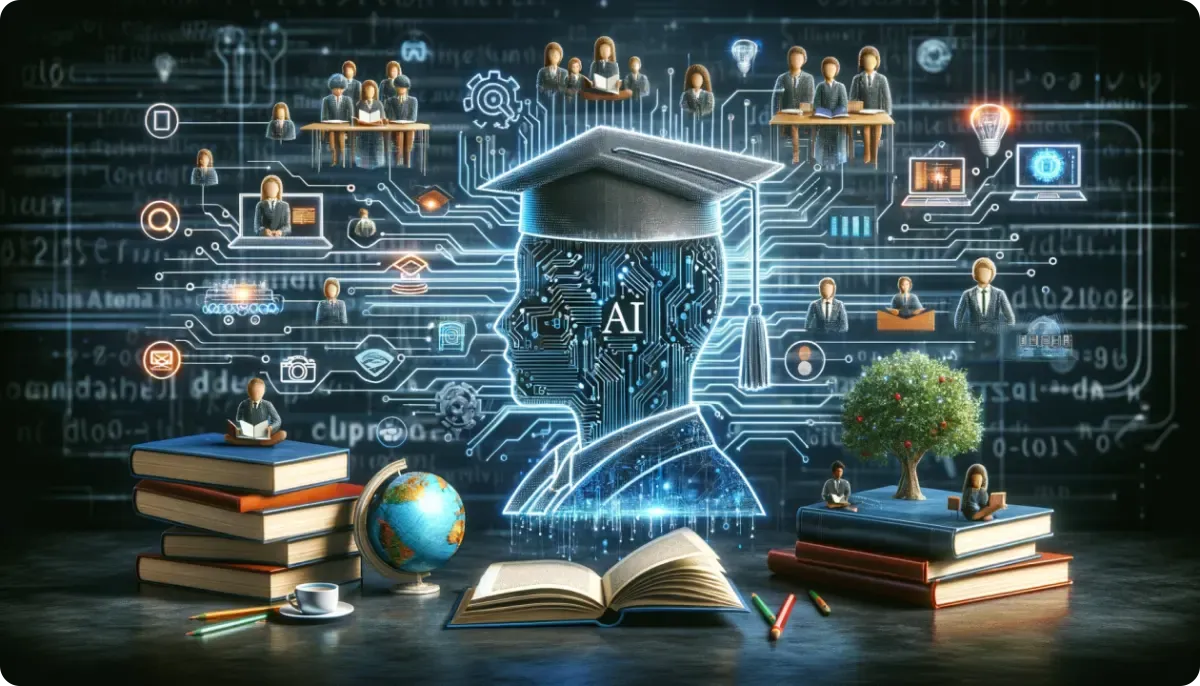
As with many other technologies that have revolutionized the world, artificial intelligence (AI) evolved over many years before it appeared to suddenly appeared onto the scene. Nowadays, AI is ubiquitous and can be a game-changer in education.
With AI, educators can customize the learning experience to meet each student’s requirements, making education more efficient and enjoyable. AI-powered technologies can also aid in the administration of tasks, streamlining the process and allowing teachers to concentrate on teaching. Find out more about how school administrators and teachers are using AI-powered tools currently and what the potential is for the future of AI in education.
Table of Contents
A brief overview of AI systems creation
“Artificial intelligence” is a term that “artificial intelligence” was actually invented in 1956. In 1956, John McCarthy, a Dartmouth College professor, organized an important workshop that created the concept of “artificial intelligence” and aimed to develop machines that could do reasoning, and utilizing human language.1
After a rapid beginning, the interest in research into AI decreased for a few years before advances in computing technology led to a revival in the late 1990s, accompanied by advancements in machine learning and neural networks. The official launch of Chat GPT in 2022 was an important milestone. It showcased amazing capabilities in understanding natural language and generation, as well as enabling the development of AI. In the present, AI significantly impacts various areas, ranging from finance and healthcare to manufacturing and transportation. Many believe that AI is set to transform education.2
Ahead of the curve for AI tools in the field of education.
Computer-assisted Instruction (CAI) started in the 1960s, providing instruction materials that were expensive on mainframe computers. With the advancement of technology in computers becoming smaller and less expensive and affordable, more schools were able to implement CAI.
Intelligent tutoring systems were introduced due to the advent of desktop computers. They offered tutorial programs that offered immediate feedback as well as individualized learning plans based on student response. These systems showed the potential advantages of personalized learning, which makes the use of technology in the field of education more attractive.3
The current applications of AI in the field of education
AI transforms education in K-12 schools by offering new solutions to personalized learning as well as adaptive learning platforms, intelligent tutoring systems as well as automated grading and feedback as well as administrative tasks.
Learning that is individualized
AI in education enables individualized learning through tailoring educational content to the individual needs of students which benefits teachers, students and schools that are resource-constrained. This method allows students to learn according to their individual paces, participate in activities that match their individual learning style and enjoy greater autonomy in their learning journey. Making use of AI assistive technology to distinguish assignments and develop methods that are based on data and adaptive, it improves your overall experience of learning while causing only a slight increase in the teacher’s workload.4
Intelligent tutoring systems
AI tutoring systems are able to provide flexible, scalable learning experiences that provide immediate feedback and correctional guidance dependent on the student’s performance. The applications of the latest technological advancements in education are helping reduce learning gaps, increase comprehension, while freeing teachers’ time by tackling routine tasks in the classroom and providing comprehensive information on how students are learning process.5 6, 6
Feedback and automated grading
The traditional method of grading written assignments is often based on bias and subjectivity. teachers’ evaluations are affected by individual preferences moods, moods and even subconscious biases. The lack of objectivity may cause inconsistent and unjust evaluations. Furthermore, the lengthy process of grading a large number of assignments is limiting teachers’ ability to give comprehensive feedback, and could negatively impact the student’s learning.7
The integration of AI in the process of grading can revolutionize traditional methods for the evaluation of the performance of students. AI can improve the efficiency, precision and fairness by drastically decreasing the amount of time spent on grading and offering immediate, accurate feedback. Teachers can assign more writing assignments and give immediate, constructive feedback that improves writing abilities among students.7
It’s crucial, however, to ensure that teachers examine AI-generated feedback to ensure it’s in line with educational goals and is tailored to the needs of each student. AI tools should be viewed as a complement rather than a replacement that help teachers focus on assessing their students’ creativity and critical thinking, while AI aids educators with objective indicators such as the structure and grammar. Through staying involved in the grading process and ensuring spot-checking AI results, educators are able to ensure the accuracy of their tests and ensure that students receive accurate and relevant feedback.8 9, 9
Administrative applications
Artificial intelligence tools are able to streamline the planning of lessons and content creation and save teachers time. These AI tools can create quality images, custom content, as well as targeted research materials within tight deadlines. With the use of AI to speed up research and production of content teachers can increase their the quality of their lessons without adding to their work load, which benefits both students as well as the resource-constrained schools.10
School principals can also utilize AI technology to ease their administrative burdens. AI chatbots can help automate administrative tasks like drafting emails, scheduling schedules and preparing professional development sessions. AI models can be utilized to study large amounts of data to aid in decision-making, for example, scheduling summer school classes based on the preferences of parents. This allows administrators to focus more on strategic initiatives, human interaction and relationship-building.11
A few ways that teachers are utilizing AI tools that are generative. AI tools
Teachers are discovering many ways to utilize AI capabilities to improve learning outcomes. Some of the most notable applications are creating visual aids to help students learn vocabulary and designing fun math lessons.
Assistance for the teaching of vocabulary
A designer for instructional design has helped teachers develop visuals for different grades and subjects by using AI. Her recommendations for making this happen include: 12
- Find challenging vocabulary words to use in the upcoming lessons
- Select the AI tool that is suited to your requirements and is easy to use
- Make specific prompts to create images that represent vocabulary words.
- Use and credit AI-generated images to students to explain the idea of AI
Math lesson planning using artificial intelligence
The author, who is a math teacher in high school and instructive coach, discusses how you can utilize AI that is generative AI to help teachers with creating engaging math classes. Her steps include: 13
- Make use of AI to connect math concepts with real-world applications and students’ passions
- Create word problems, tasks for performance and other projects that are aligned with standards of the curriculum.
- Create comprehensive lesson plans that include important questions, exercises and extensions opportunities
- Make use of AI to design inquiry-based activities which foster critical thinking as well as quantitative literacy skills.
To get more ideas from teachers, go to Edutopia.org or search on the web using your preferred AI-enabled tool for searching.
AI-driven learning
AI applications in education could help facilitate collaboration through interactive technology and the creation of content and curation for teachers and students alike. These tools assist teachers in developing content that is aligned with the standard curriculum, making sure that educational materials accommodate the needs of different students.
Interactive tools such as virtual labs and educational games can be used to engage students, and collaborative platforms aid in the learning of peers. Teachers can utilize these technologies as well as the data-driven information they offer to tailor the learning process and provide flexible feedback, improving the overall experience of learning.
AI in education: the future AI in education
The rapid acceptance of AI in recent years, as well as its expanding application in education, has generated reactions that range from bans on the spot to enthusiastic acceptance. Because AI tools are likely to develop and alter our methods of operation across all aspects of our lives educators and educational administrators must accept a number of ethical concerns regarding AI in education.
Privacy or bias, as well as equity
Privacy is a major issue when it comes to artificial intelligence in the field of education. AI tools typically gather and process huge quantities of data, which raises concerns over how this data is utilized and how it is protected. To answer this question, teachers should be transparent by informing parents and children about the information they collect and seeking their consent prior to utilizing AI tools.14
The biases of AI is a further problem, since AI systems may take biases learned from their data training, leading to unfair or discriminatory results. Teachers must be aware of biases and look to use AI tools which have been examined to ensure fairness. In addition, including diverse perspectives into AI development and continuously checking for bias can help reduce problems.15
Concerns regarding equity arise when evaluating how to access AI tools. There are many students who do not have the same accessibility to the latest technology. This could create a digital gap. Schools must make an effort to provide an equitable access to AI tools and also provide education for students and teachers to ensure that everyone is able to take advantage of these tools.14
Concerns regarding the use by students of AI
Teachers are worried about students who use AI technology to skip learning, like using it to finish their assignments. One approach to combat this is by creating tasks that demand personal involvement and critical thinking. These are difficult to AI technology to replicate.9
The teaching of AI literacy is essential. Students need to be aware of AI’s strengths and weaknesses as well as the possibility for AI systems to create incorrect or biased content. Inspiring students to utilize AI tools to learn rather than slicing assignments to assist in maintaining academic integrity.15
If they consider these issues and adopting thoughtful strategies, administrators and educators can reap AI’s potential benefits while also dealing with its possible drawbacks.
AI technology implementation issues and best practices
Reluctance to change, cost-intensive infrastructure, and requirements are the main obstacles to the implementation of AI in the field of education. The best methods for implementing artificial intelligence in the field of education are similar to the ones to integrate any other technology in the education sector. This includes providing a thorough education for teachers, ensuring equal use of AI tools and addressing ethical issues, and maintaining a constant dialogue with all stakeholders in order to build an informed and supportive community.
Be confident that you can meet with confidence the next generation of AI in education at The University of Iowa
AI in education has the potential to transform learning by enhancing it as well as streamlining administrative processes and increasing the quality of teaching. However, ethical issues like privacy as well as bias and equity remain major obstacles. Through addressing these concerns and implementing the best practices, educators can benefit from AI’s potential while ensuring the integrity of their academics and ensuring equity.
This University of Iowa Online MA in Leadership, Teaching, and Cultural Competency prepares students with practical techniques and theoretical frameworks required to help you teach effectively in the present and in the future. The program is backed by the strength of the power of a Big Ten research university, the curriculum provides a blend of instruction in pedagogical assessment administration, as well as technology issues within the context of cultural competency. Make an appointment with an admissions outreach specialist to find out more about the rigors of the curriculum and the ease of an online format.