
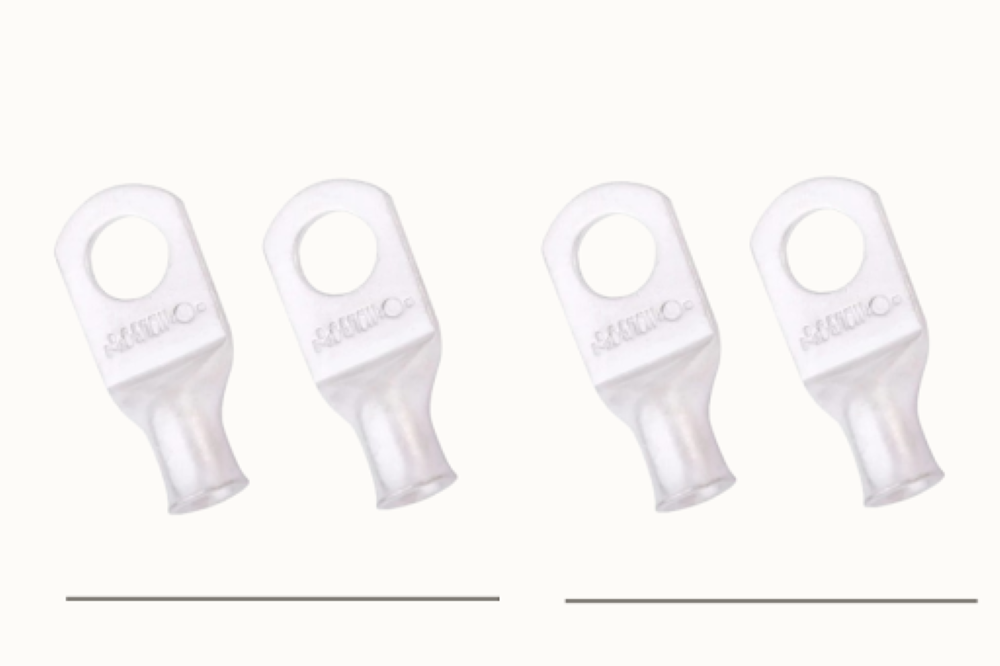
When designing electrical systems for demanding applications—whether it’s a blue-water cruising sailboat, a remote solar array in the high desert, or heavy industrial machinery—the smallest components often carry the heaviest burden. Among these, the electrical lug is frequently overlooked. However, in environments defined by moisture, salt spray, extreme temperatures, and vibration, the choice of termination hardware is the difference between a reliable system and a catastrophic failure.
For mid-range power applications, 6 AWG tinned lugs (also known as 6 gauge tinned lugs) have become the gold standard. While standard bare copper lugs might suffice in a dry, climate-controlled server room, they quickly succumb to the elements in harsh conditions. This article explores why the specific combination of 6 AWG sizing and tin plating is critical for longevity and safety.
1. The Chemistry of Protection: Why Tinning Matters
The primary enemy of any electrical connection is oxidation. Copper is an excellent conductor, but it is highly reactive to oxygen and moisture. When bare copper is exposed to the atmosphere, it forms a layer of copper oxide. Unlike the base metal, copper oxide is a poor conductor; it creates electrical resistance, which leads to heat, voltage drops, and eventually, the physical degradation of the connection.
The Role of Tin Plating
6 gauge tinned lugs are manufactured by coating high-purity copper with a thin layer of tin. This process, often done via electroplating, creates a barrier that is remarkably resistant to corrosion. Tin does not oxidize as aggressively as copper, especially in the presence of salt or acidic moisture. By using tinned lugs, you ensure that the contact surface remains clean and conductive for years, rather than months.
2. Navigating the “Green Crust”: Marine and Coastal Benefits
In marine environments, the combination of saltwater and electricity creates an accelerated corrosive effect known as galvanic corrosion. If you have ever looked at old battery terminals on a boat and seen a fuzzy green or white crust, you have seen the death of a connection.
Because 6 AWG tinned lugs are protected by a tin barrier, they are significantly less likely to develop this “green crust.”8 This is particularly important for 6 AWG wire, which is frequently used for:
- Trolling motor leads.
- Small wind turbine connections.
- DC distribution panels.
- Battery-to-inverter cabling in smaller off-grid systems.
In these applications, a failure isn’t just an inconvenience; it can be a safety hazard. A corroded lug increases resistance, and resistance generates heat. In a worst-case scenario, this heat can melt insulation or start a fire.
3. Physical Integrity and Conductivity
One might wonder if the tin plating reduces the conductivity of the lug. While tin itself is less conductive than pure copper, the difference in a termination lug is negligible. In fact, because the tin prevents the formation of highly resistive oxide layers, a 6 awg tinned lug will maintain higher effective conductivity over its lifespan than a bare copper lug would in the same environment.
Precision Sizing for 6 AWG
The 6 AWG (American Wire Gauge) standard represents a wire with a diameter of approximately 4.11mm. Using a lug specifically designed for this gauge is vital.
- Proper Fit: A dedicated 6 gauge lug ensures that when you crimp the barrel, there are no air gaps.
- Cold Welding: High-quality tinned lugs are often made from seamless tubing. When crimped with the correct tool, the wire strands and the lug barrel undergo “cold welding,” forming a solid mass of metal that keeps out oxygen and moisture.
4. Durability Against Vibration and Thermal Cycling
Harsh environments aren’t just about chemistry; they are about physics. Off-road vehicles, heavy equipment, and marine engines subject electrical joints to constant vibration.
6 AWG tinned lugs are typically manufactured from heavy-duty annealed copper. The annealing process makes the metal slightly more ductile, allowing it to withstand the stresses of vibration without cracking or becoming brittle.13 Furthermore, in outdoor environments, components undergo thermal cycling—expanding in the heat of the day and contracting in the cold of the night. The robust construction of a quality tinned lug ensures that the mechanical seal between the wire and the terminal remains tight despite these constant fluctuations.
5. Comparison: Tinned vs. Bare Copper Lugs
| Feature | Bare Copper Lugs | 6 AWG Tinned Lugs |
|---|---|---|
| Corrosion Resistance | Low (Oxidizes quickly) | High (Resists salt/moisture) |
| Longevity | Short-term in dry areas | Long-term in all environments |
| Typical Use Case | Indoor residential | Marine, Industrial, Solar |
| Safety Profile | Risks heat buildup over time | Stable resistance over time |
| Solderability | Requires cleaning if oxidized | Excellent; tin aids solder flow |
6. Best Practices for Installation
To truly leverage the benefits of 6 gauge tinned lugs, the installation process must be as high-quality as the component itself.
- Use Tinned Wire: Pairing a tinned lug with bare copper wire is a half-measure. For maximum protection, use tinned marine-grade 6 AWG wire. This prevents “wicking,” where moisture travels up the wire strands and corrodes the cable from the inside out.
- The Right Crimp: Avoid using pliers or a hammer. Use a hex-crimp or a point-to-cup crimping tool designed for 6 AWG terminals to ensure a gas-tight seal.
- Adhesive-Lined Heat Shrink: After crimping, slide a piece of dual-wall heat shrink over the barrel and the wire insulation. The internal adhesive melts to create a waterproof seal, acting as a second line of defense behind the tin plating.
Conclusion
In the world of electrical engineering, the cost difference between a bare copper lug and a 6 AWG tinned lug is measured in cents, but the cost of a failure is measured in thousands of dollars in repairs, downtime, or equipment loss.
By choosing 6 gauge tinned lugs, you are investing in peace of mind. You are ensuring that your power delivery remains consistent, your connections remain cool, and your system can withstand the harshest salt spray, humidity, and heat the world can throw at it. Whether you are refitting a yacht or building a remote telecommunications tower, don’t let a small piece of copper be the weak link in your chain.